

What Wood Ducks can teach us about noticing and connection.
The PESA National Wellbeing Education Conference in Adelaide had many amazing moments where research met practice. I am so grateful for the efforts of all the keynote speakers and masterclass presenters. One month on, and Gina Chick’s story of the wild Wood Duck’s - Theo and Anastasia, still reverberates as a wonderful metaphor of noticing and connection.
I can only imagine how enticing the sight of two Wood Ducks, sources of sustenance, were for a hungry and fatigued Gina on her fiftieth day surviving the wilds of Tasmania competing in Alone Australia! Gina’s description of mimicking their contact call as they swam and fed on the water had me hooked. Would the ducks respond immediately to her call and fall victim to this mimicry trick? It was not the case, and Gina went without the tantalizing Peking Duck on her menu. What happened next was the part of the story that has me pondering: those ducks demonstrated curiosity in Gina and the following morning came to her hut and paid her a visit. This is like what happens in schools with students, but I am yet to resolve if Gina is representing the role of the student or the teacher in this story.
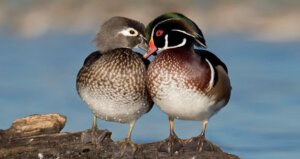
We all make ‘bids for attention’ in our interactions. These bids are sometimes prosocial like smiles, greetings and other niceties. Bids can also take the form of ‘acting out behaviours’. Those less desirable and often frustrating actions like being in a huff, calling out, niggling with others, being divisive or even rude. Eitherway, it is an attempt to connect and express what we need when we don’t have the accurate words to articulate how we feel or what we want. Dr John Gottman’s research highlighted how couples need to notice their partner’s bids for attention. In reality all relationships flourish when we look for subtle bids from other people. I suspect this relates to how humans interact to the animal kingdom as well and they are very adept at noticing! Were Theo and Anastasia being cunning in the hope that Gina, by naming them, would not then eat them? Or did Theo and Anastasia hear Gina’s attempts to communicate as a bid for attention and respond to Gina’s need for company and community with curiosity?
In the classroom, students may struggle with the language to tell teachers what they need. Often students just want to be seen and heard because they are struggling with some other concern whether it be related to the task at hand or not. Gina’s story of the Wood Ducks highlighted the importance of noticing how our students are communicating and being more aware of their bids for help. This linked beautifully to the earlier message from Associate Professor Judith Howard. She urged us to resist management of these bids from a behaviourist approach. Reminding us to resist assumption and lean in with curiosity instead. We were urged to recognize and accept that possible underlying trauma affects a students’ perception of safety, their ability to relate and attach to others, and their capacity to self-regulate. Judith encouraged us to be aware of the guidelines for Trauma-Aware Education as it provides an informed way of thinking, believing, planning and acting that is founded in neuroscience.
Gina credited her ability to win Alone Australia by beating the game. She recognized her connection with nature, befriended the animals and survived because she wasn’t trying to defeat her environment in a ‘woMan versus Wild’ way. She took the approach of ‘woMan WITHIN Wild’ approach. Perhaps that is also the answer in our classrooms. When we lean in to those bids for attention with curiosity it becomes less about the words we say and more about the way we listen!

You can review most of the material from the PESA National Wellbeing Conference in the Member’s Only Dashboard on the PESA website. Note: you will need to be logged in and navigate to the '2025 Conference Resources' tile.
Follow PESA on your favourite social channels: